

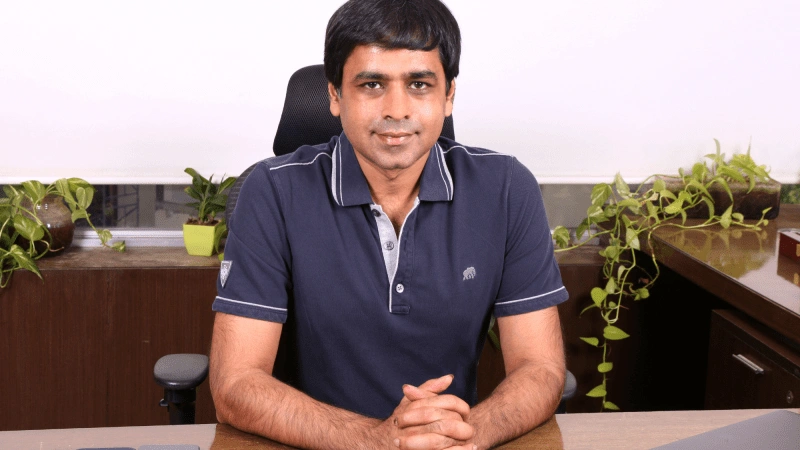
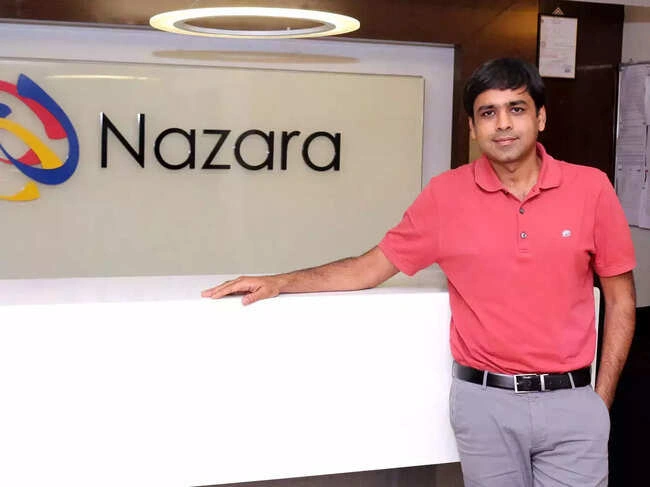
I’m Nitish Mittersain, founder and CEO of Nazara Technologies, one of India’s leading gaming and esports companies.
For more than two decades, I’ve been building and scaling gaming businesses in India, long before the market became globally recognized. I’ve worked across multiple phases of the industry — from early mobile distribution through telecom operators to the modern ecosystem of real-money gaming, esports, and digital entertainment.
Nazara Technologies was built with a long-term vision: not to chase trends, but to grow alongside the market. Today, we operate across multiple gaming verticals and continue to expand within one of the fastest-growing digital economies in the world.
My perspective is shaped not by theory, but by direct involvement in how this market has evolved — what worked, what failed, and what continues to define its future.
I’ve spent over two decades building and scaling gaming businesses in India. When I started, the market didn’t exist in the way people understand it today. There was no structured ecosystem, no defined user behavior, and certainly no predictable monetization.
What we had instead was raw potential — a massive population, rapidly growing access to mobile devices, and an appetite for digital entertainment that was still largely untapped.
India is not a conventional gaming market. It does not evolve in the same way as Europe or North America. It grows faster, behaves differently, and constantly reshapes the rules.
That’s exactly why it has become one of the most important regions in global gaming today.
My Journey in India’s Gaming Industry
When I first entered the industry, the focus wasn’t on apps or platforms — it was on distribution. Telecom operators controlled access, and content had to be adapted to extremely limited devices.
This forced us to think differently.
Instead of building for high-end infrastructure, we built for scale. Instead of focusing on premium experiences, we focused on accessibility. That mindset shaped everything that followed.
As mobile technology evolved, so did the opportunity. What started as simple content distribution gradually turned into full-scale gaming products. This is where the real shift happened.
To understand how India’s gaming ecosystem evolved into what it is today, you need to look at it from the inside.
I’ve been part of this transformation from the early stages — from a time when mobile gaming was limited by infrastructure to a market that now supports esports, real-money gaming, and large-scale digital platforms.
Over the years, I’ve worked across multiple phases of this evolution, building products, scaling businesses, and adapting to a market that never follows a predictable path.
Building Nazara Technologies
Nazara Technologies was never designed as a single-product company. From the beginning, the goal was to build an ecosystem — one that could evolve alongside the market.
We expanded across multiple verticals: mobile gaming, esports, interactive entertainment, and real-money formats. This diversification allowed us to stay resilient in a market that changes faster than most.
Becoming a publicly listed company added another layer of discipline. It forced us to operate with transparency, structure, and long-term thinking — all of which are critical in a market like India.
Market Snapshot
Why India Became a Gaming Powerhouse
India’s growth in gaming is not accidental — it is structural.
The foundation was built on three key factors: accessibility, affordability, and scale. Smartphones became cheaper. Internet access became widespread. And digital payments removed friction from transactions.
This combination created an environment where millions of users could enter the ecosystem almost simultaneously. Unlike Western markets, where growth was gradual, India experienced a compressed evolution — years of development happening within a much shorter timeframe.
The Shift Toward Real-Money Gaming
As the market matured, user expectations changed. Entertainment alone was no longer enough. Players began looking for engagement, competition, and rewards. This is where real-money gaming started to gain traction.
The transition was not immediate, but it was inevitable. Once users became comfortable with digital payments, the barrier to entry disappeared. From that point forward, monetization models evolved rapidly.
Today, real-money formats are one of the most dynamic segments of the Indian gaming ecosystem.
Key Characteristics of Indian Players
Indian players behave differently from users in regulated Western markets. Their decisions are faster, their expectations are higher, and their loyalty is far more dynamic.
The first defining trait is a strong response to incentives. Bonuses are not just a marketing tool — they are a core part of the user journey. Acquisition, engagement, and retention are all heavily influenced by promotional mechanics.
At the same time, Indian users are highly mobile-driven. Sessions are shorter but more frequent. Another important factor is adaptability — players quickly learn platforms, test multiple brands, and shift based on value rather than long-term loyalty.
Player Behavior Distribution
The Regulatory Landscape in India
Regulation in India is one of the most complex aspects of the market. There is no single, unified framework governing gaming or iGaming across the country. Instead, regulation is handled at the state level, which creates fragmentation.
Some states allow certain forms of gaming, others restrict or ban them entirely. The distinction between skill-based and chance-based gaming further complicates the legal environment.
For operators, this means one thing: adaptability is essential. A strategy that works in one region may not be applicable in another. Compliance is not a checkbox — it is an ongoing process.
Market Structure
| Segment | Primary Driver | Status |
|---|---|---|
| Mobile Gaming | Mass adoption | Stable |
| Real-Money Gaming | Bonus-driven growth | Expanding |
| Esports | Younger audience | Emerging |
| Regulation | State-level control | Unstable |
Payment Ecosystem and Market Adaptation
Payments define the real accessibility of the market. In India, users expect transactions to be fast, seamless, and localized. Traditional banking alone is not enough — platforms must integrate with local payment solutions and adapt to regional preferences.
Speed plays a critical role. Delays in deposits or withdrawals directly affect retention. Trust is built through reliability, not messaging. Additionally, alternative methods such as crypto are gaining attention, especially among more advanced users.
Opportunities for Operators
India offers scale, but scale alone is not enough. Operators that succeed in this market focus on three things: mobile optimization, localization, and value-driven engagement.
The entire experience must be designed for small screens, fast interactions, and minimal friction. Language, payment methods, and user interface must reflect local expectations. Bonuses, promotions, and incentives are not optional — they are expected.
Risks and Challenges
Despite its potential, India remains a volatile market. Regulatory uncertainty creates risk for long-term planning. Fraud and abuse are also ongoing concerns, particularly in bonus-driven ecosystems. Without strong control mechanisms, profitability can be affected.
Finally, competition is intense. New platforms enter the market constantly, and user loyalty remains low. This combination makes India both highly attractive and highly demanding.
Market Evolution Timeline
- 2000–2009Telecom EraContent via operators, feature phones, zero app stores
- 2010–2015Mobile EntrySmartphones arrive, early adoption phase begins
- 2016–2020Rapid GrowthJio launches, cheap data, 200M+ new players enter market
- 2021–NowMonetizationRise of RMG, esports investment, UPI dominance
- FutureRegulation & ConsolidationPossible central framework, institutional capital expected
The Future of iGaming in India
India is still in the early stages of defining its long-term regulatory and commercial structure. The next phase of growth will depend on clarity. A more unified regulatory framework would unlock significant investment and stability across the market.
At the same time, user demand will continue to grow. The combination of mobile adoption, digital payments, and entertainment demand creates a foundation that is difficult to replicate elsewhere.
The question is not whether the market will grow — it is how structured that growth will become.
Applying Market Insights in Practice
Understanding a market is one thing. Applying that understanding in real products is what ultimately defines success.
One example of this approach in action is Rummy Nabob — a platform built specifically with Indian player behavior in mind. Rather than adapting a global product to the region, the focus was on designing an experience from the ground up around local expectations.
The platform emphasizes fast mobile access, localized payment solutions, and gameplay mechanics aligned with skill-based formats like rummy, which remain deeply rooted in Indian gaming culture. This creates a more natural entry point for users compared to traditional casino-first models.
Equally important is the balance between engagement and retention. Incentive structures, session design, and progression systems are tailored to match how Indian players interact with digital platforms — short sessions, frequent returns, and value-driven decision making.
Projects like Rummy Nabob illustrate a broader principle: success in India does not come from replication, but from adaptation. Platforms that align with local behavior, infrastructure, and expectations are far more likely to scale sustainably.
From my perspective, India is one of the most complex and rewarding markets in global gaming. It does not reward passive strategies. It rewards those who adapt, experiment, and understand the nuances of user behavior.
The opportunity is real — but so is the challenge. And that balance is exactly what defines the Indian gaming market today.